Book Talk: What I Read in December
I already hinted at this one in my November reading list so if you’ve been following my reading journey in 2025, this last instalment of Book Talk for 2025 shouldn’t be a surprise. But in case you didn’t know, every December since 2020, I’ve been leaning into my annual, end-of-the-year round of existential dread and reading perhaps the most terrifying sci-fi series ever written.
At least to me anyway. It’s a tradition, don’t worry about it. But there’s just something about the snow—and it finally snowed here last week—that makes me look at the night sky and think about the horrors that hide in it.
I know that sounds unhinged. But here’s the thing: these books remind me that the universe is vast, indifferent, and operating on timescales that make human concerns feel microscopic. And weirdly? That’s motivating. It makes me think, “Okay, I’m a tiny speck on a rock hurtling through space—so what am I doing with my time? Am I writing? Am I actually doing the things I said I’d do?”
The answer is usually “not enough,” which is exactly the motivation I need going into a new year. And yes, I know. It’s weird. But that’s how I do it. I used to read a book series featuring a kid wizard before 2020 and that always made me feel happy too. But I stopped making excuses for bad people in 2020 so there’s that.
Anyway, that was a bit of a tangent. No need to dwell on it too much. As usual, you can find my reading list for the month on Goodreads here.
December Breakdown: Book Recommendations
So, as I’ve explained, December is my sci-fi month. I don’t see myself breaking from this tradition anytime soon. And as usual, I read all three of Liu Cixin’s trilogy, added a Ken Liu novella to the mix (which for some reason I hadn’t read until now) and also decided to add another sci-fi book to the mix. Now, not sure how many of you know but I’m very, very picky about my sci-fi books. More so than fantasy. So, I did look around quite a bit before landing on my final choice for the year.
And honestly, I’m pretty happy with my choice. Because after the Remembrance of Earth’s Past trilogy, I needed an optimistic sci-fi piece. And trust me, if you haven’t heard of it, prepare yourself.
Liu Cixin doesn’t write cozy space fantasies. His books are hard sci-fi that take physics, game theory, and the Fermi Paradox seriously. They’re bleak, brilliant, and will make you question everything.
And with this warning, here’s the grand reveal of what I read in December:
- The Three-Body Problem by Liu Cixin
- The Dark Forest by Liu Cixin
- Death’s End by Liu Cixin
- All That We See or Seem by Ken Liu
- Project Hail Mary by Andy Weir
Book 1: The Three-Body Problem
- Author: Liu Cixin
- Genre: Science Fiction

Why I Picked It Up
Obviously, I’ve read this before. But do you want to know how I found The Three-Body Problem? Let me set the stage for you: It’s the end of fall of 2020; the world’s still in lockdown and guess who’s freaking out about managing work and uni at the same time? I’ll give you a hint: me.
I’d just started seriously working—remotely, of course—and the slow realisation that the world’s going to—and pardon my French here—shit had just started sinking in. Like, up until maybe the summers, I’d thought some of the stuff in my personal life was going to be fine. Everything would be fine.
Until I realised it wasn’t going to be fine and me working wasn’t just me working in college during a global pandemic because the logistics of transferring funds from one country to another was difficult. It was because my dad was never ever going to be employed again. And I was really angry at the world. I’m not anymore, in case you’re wondering.
But I was so, so angry. That wizard book that always made me feel better—well, it wasn’t working. The movies weren’t working. Twilight and the Hunger Games weren’t working either.
So, I started looking for books where the angry (female) protagonist burns the world. And that’s how I found The Three-Body Problem. While this little description is not the entire story, there’s certainly an element of this in the actual book. And the title: I love physics so the title had me hooked from the get go but Ye Wenjie—she’s someone I could be but I choose not to.
Summary
Set during China’s Cultural Revolution, the story opens with astrophysicist Ye Wenjie witnessing her father’s brutal execution during a political struggle session. Traumatized and disillusioned with humanity, she’s sent to a remote military research facility called Red Coast Base, where she works on a secret project attempting to contact extraterrestrial life.
Decades later, scientist Wang Miao gets pulled into a mysterious investigation involving a series of physicist suicides and a strange virtual reality game called “Three Body.” The game depicts an alien civilization on a planet with three suns, where survival is nearly impossible due to chaotic, unpredictable eras of extreme heat and cold.
As Wang digs deeper, he discovers that Ye Wenjie succeeded in her mission—she contacted an alien civilization called the Trisolarans, whose planet is destabilizing. And she invited them to Earth. The Trisolarans are coming, and humanity has roughly 400 years to prepare for an invasion by a technologically superior civilization that views us as obstacles to their survival.
What I Liked
So, from the get go, Liu Cixin isn’t your typical sci-fi writer and it shows in his book. Everything we’ve talked about with writing books—mostly from a western perspective, by the way, because I’m more comfortable with that—just throw it out of the window. There’s no chosen one, no heroics, we’re not going to be saved. And this speaks to me, especially when I first read the book during a global pandemic.
The book operates on this brutal logic of game theory and survival. Ye Wenjie’s decision to invite the Trisolarans isn’t framed as villainous, it’s the logical conclusion of someone who has lost faith in humanity’s ability to save itself. And it works. We’ve talked about making our villains more believable in the past and Liu Cixin has done such a good job that I don’t think there’s a central villain in the book. Unless you count the Trisolarans as the villains, of course.
The Cultural Revolution backdrop is devastating. I grew up in a relatively unstable country myself but I’ve had enough privilege to not be affected by it. Ye Wenjie doesn’t get that protection. Liu Cixin captures the brutality of a revolution and its cost on an individual level.
Ye Wenjie’s trauma isn’t just personal: it’s historical, political, and ideological. Her disillusionment with humanity is rooted in witnessing humanity at its worst. This context makes her betrayal of Earth feel tragically understandable rather than cartoonishly evil. To be honest, given the state of the world today, especially as a woman, as a member of a minority religious and ethnic group, I get it. And I think you’d too. Like, you have to be unbelievably privileged to not get it. It’s insane. Heck, I say let’s make all of our “leaders” from every country read this so they’d get it. It’s that good.
And we’re not even talking about The Three Body game yet which in itself is brilliant. It’s this puzzle that mirrors the Trisolarans’ existential problem, and watching Wang piece together what’s happening is genuinely gripping. The game sequences are eerie, beautiful, and unsettling.
The science is hard and true. Liu Cixin doesn’t dumb anything down. He throws physics, astronomy, and mathematics at you and trusts you to keep up. The sophons—subatomic particles the Trisolarans use to sabotage Earth’s scientific progress—are one of the most terrifying and ingenious sci-fi concepts I’ve ever encountered.
This is one of the best books I have ever read in my life. You think Dune’s good? Check out The Three-Body Problem. I dare you.
Downsides
The pacing is slow, especially in the first half. Liu Cixin takes his time establishing the Cultural Revolution, the Red Coast Base, and the mystery before the sci-fi really kicks in. If you’re expecting fast-paced action, you’ll be disappointed. This is a slow burn that rewards patience. And I LOVE IT.
The characters are more vessels for ideas than fully fleshed-out people. If you need deep character work to stay engaged, this might frustrate you.
Some of the dialogue feels stiff, which might be a translation issue or just Liu Cixin’s style. Characters sometimes speak in ways that feel more like delivering information than natural conversation. It didn’t bother me, but I know it’s a common criticism.
The book is bleak. There’s no comfort here, no reassurance that things will work out. If you’re looking for hopeful sci-fi that celebrates human ingenuity and cooperation, this is not that book. This is “the universe is a dark forest and we’re all hiding in fear.”
Final Thoughts & Who Should Read It
Perfect for fans of hard sci-fi, readers who want science fiction that takes science seriously, anyone interested in Chinese literature or the Cultural Revolution, and people who love stories operating on civilization-scale timelines rather than individual heroism. If you enjoyed Contact by Carl Sagan, Blindsight by Peter Watts, or A Canticle for Leibowitz, you’ll love this.
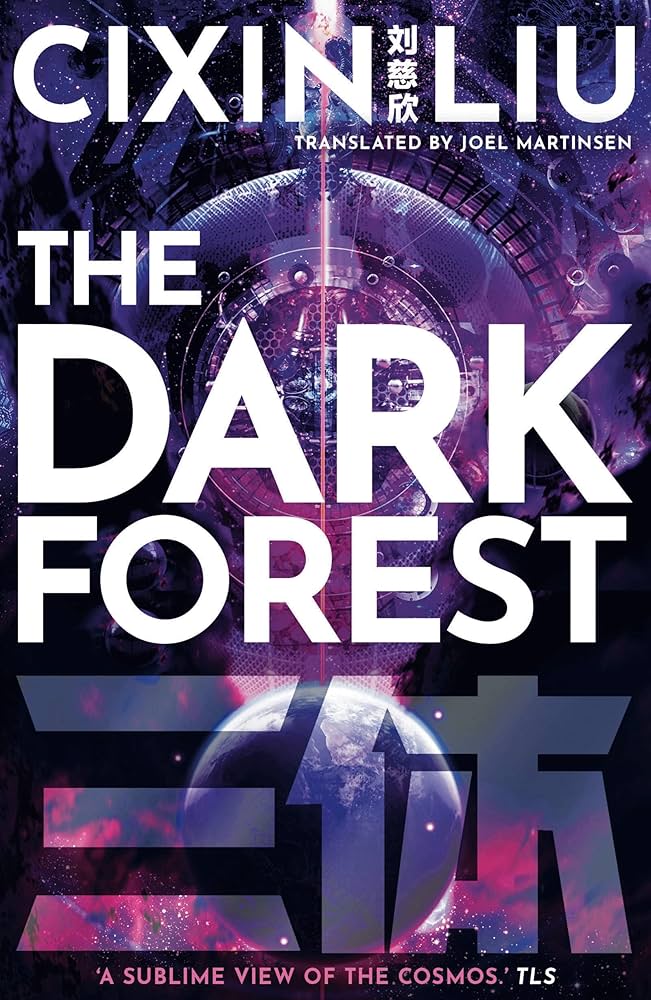
Book 2: The Dark Forest
- Author: Liu Cixin
- Genre: Science Fiction
Why I Picked It Up
Naturally, The Three-Body Problem always makes me reach out for The Dark Forest. This series has this ability to make you want to know more. Like, you’ll desperately want to know what happens next just for that slither of hope that maybe things will work out. But be warned: The Dark Forest is where Liu Cixin fully commits to his vision of a cold, ruthless universe.
This is the book that articulates the Dark Forest theory: the idea that the universe is full of civilizations hiding in terror, because revealing yourself means certain destruction. Every time I re-read this book, it scares me. In fact, I’d say if the first book hadn’t already convinced me of it, The Dark Forest has made me a firm believer in the Dark Forest theory. The scale, the philosophy, the absolute bleakness of everything is beautiful in its devastation.
Summary
Humanity knows the Trisolarans are coming in 400 years, and Earth’s scientific progress has been sabotaged by sophons. The Trisolarans can see everything humanity does, so any defense strategy is immediately known to the enemy.
In response, the UN creates the Wallfacer Project: four individuals are given unlimited resources and authority to develop secret defense plans. Because the Trisolarans can’t read human thoughts, these Wallfacers can create strategies entirely in their minds, revealing nothing until it’s too late for the enemy to counter.
Luo Ji, a cynical sociology professor with no interest in saving humanity, is inexplicably chosen as a Wallfacer. He’s the least qualified, least motivated person for the job—and yet, through his relationship with a cosmologist and his understanding of “cosmic sociology,” he stumbles onto the one theory that could save Earth: the Dark Forest theory.
Luo Ji must use this theory to create a deterrent that will force the Trisolarans to leave Earth alone—or doom humanity in the process.
What I Liked
The Dark Forest theory is one of the most compelling answers to the Fermi Paradox I’ve ever encountered. Seriously.
It’s elegant, terrifying, and feels disturbingly plausible. Liu Cixin builds it logically, piece by piece, until the full horror of it settles in. The universe isn’t empty because life is rare—it’s silent because everyone is hiding.
Luo Ji’s character arc is phenomenal. He starts as a hedonistic, selfish academic who wants nothing to do with saving the world, and his transformation into someone willing to gamble with humanity’s survival is both tragic and inevitable. He’s not a hero. He’s a man backed into a corner, making impossible choices with incomplete information.
The Wallfacer concept is brilliant. The idea that humanity’s only advantage is the privacy of human thought—and that our best defense is four people thinking in secret—is such a clever inversion of typical sci-fi tropes. I mean, you’d think it’s so, so simple, right? The idea that your thoughts can protect you. In a way, the author is kind of exploring the uniqueness of the human mind here. And let’s be real: almost all the Wallfacers’ plans fail, but I really loved how every plan was thought of and it just goes to show how unique the human brain is.
You can see this argument play out right now with the whole AGI and anti-AI crowd right now. And I know this is a tangent—and I use AI for feedback in my blogging too—but like, it kind of holds true. AI shouldn’t be replacing the arts because it’s the human mind that creates stuff. You can’t call a book or picture created via a prompt an actual work of art. This probably doesn’t make sense, but I promise when you read this part in the book, you’ll get what I’m talking about.
Also, as someone who adores 1984, the idea that human thought has the ultimate privacy really, really gets me excited especially since you have Big Brother in 1984 talking about thoughtcrimes and all. As you can see, this series is my jam. I could talk all day about it.
There’s also a lot of time jumps in this book. Liu Cixin moves through decades, sometimes centuries, showing how civilizations change and adapt over generations. Humanity goes through cycles of defeatism, hope, complacency, and panic. It’s a broader view of history than most sci-fi attempts, and it’s very effective.
The ending itself is one of the most tense, perfectly executed climaxes in sci-fi. I won’t spoil it, but the final confrontation between Luo Ji and the Trisolarans is a masterclass in stakes, consequences, and Game Theory. It’s not about who shoots first, it’s about who’s willing to pull the trigger knowing what it means.
Downsides
Okay, so let’s be clear—because 80% of my audience is based in the western world—I grew up on negative stereotyping, strict gender roles, and cultural debates on what a woman is. I’m lucky I have a great father and grandfather. They’re basically feminists, okay? And I’ve explained what that means to my dad and yeah—initially, he was shocked, but he has three very liberal daughters, a result of his own parenting, so he got over that one very quickly. A lot of men in my part of the world don’t like the word feminist. I have a lot of uncles who don’t, actually.
But I’ve grown up in an extremely safe environment where I’d see both my dad and grandpa call out sexism and explain the psychology behind certain people’s opinions. So, when I see a problematic depiction of a woman, especially by an eastern writer, I just roll my eyes and move on. That’s a problem, yes but I’m used to it. I also know you can’t argue with people like this because there’s no point.
A lot of you will not have this worldview. So, be prepared for Luo Ji’s “ideal woman” arc. I’m not defending it. It’s a bad fantasy, okay? And it very literally objectifies women. This is why as much as I like The Dark Forest, I’m more inclined to recommend The Three-Body Problem over it. But as far as I know, Liu Cixin isn’t trying to undermine the women’s movement globally (unlike some writers we all know). It’s not an excuse, but it also low-key reveals how kind of sexist sci-fi tends to be. On the plus side, later in the book, Liu Cixin actually critique’s Luo Ji’s fantasy but he just lingered on it way too much for me to be comfortable.
Overall, if you’re not invested in the worldbuilding, the book will feel slow. But once the Dark Forest theory is introduced, the pacing accelerates dramatically. This book is even bleaker than The Three-Body Problem. If you found the first book depressing, this one will destroy you. There’s no hope here—only survival through mutually assured destruction. It’s brilliant, but it’s dark. Very dark.
Final Thoughts & Who Should Read It
If you read The Three-Body Problem and want to see Liu Cixin fully commit to his vision of a ruthless, game theory-driven universe, this is essential. Perfect for readers who love philosophical sci-fi, Game Theory and the Fermi Paradox, stories operating on civilization timescales, and protagonists who aren’t heroes—just people trying to survive impossible situations.
Book 3: Death’s End
- Author: Liu Cixin
- Genre: Science Fiction

Why I Picked It Up
If The Three-Body Problem is my favorite book in the trilogy, Death’s End is the one that haunts me. This is the conclusion to the Remembrance of Earth’s Past series, and it’s the most ambitious, sprawling, and cosmically devastating book Liu Cixin has written.
Every year I finish this book and sit in silence for a while, trying to process what I just read. It operates on timescales that span millions of years, across dimensions, and ends with the heat death of the universe. It’s not just the end of humanity’s story—it’s the end of everything.I re-read it every December because it’s the ultimate reminder that nothing lasts, everything ends, and the universe doesn’t care.
Summary
Death’s End picks up after the fragile deterrence established at the end of The Dark Forest. Humanity and the Trisolarans exist in an uneasy balance: Luo Ji holds the trigger to a system that will broadcast both civilizations’ locations to the universe, guaranteeing mutual destruction. As long as he’s willing to pull the trigger, Earth is safe.
But Luo Ji is aging, and humanity must choose a new Swordholder—someone willing to destroy both civilizations if the Trisolarans attack. The chosen successor is Cheng Xin, an aerospace engineer who worked on a project to send human brains to the Trisolaran fleet. She’s compassionate, thoughtful, and deeply committed to preserving life. She’s also completely unsuited for the role. The moment Cheng Xin takes over as Swordholder, the Trisolarans invade. They know she won’t pull the trigger. And they’re right.
What follows is humanity’s collapse, exile, survival in the outer solar system, and eventually a revelation about the true nature of the universe: it’s not just a dark forest. It’s a battlefield where civilizations wage war by weaponizing the laws of physics themselves, collapsing dimensions and draining the universe of energy.
Cheng Xin’s decisions—made with the best intentions—lead to catastrophe after catastrophe. And as the universe itself begins to die, she must reckon with the consequences of her compassion in a cosmos that rewards ruthlessness.
What I Liked
The scope of this book is insane. Liu Cixin doesn’t just end the story of Earth and the Trisolarans, he ends the universe. The final sections operate on timescales of millions of years, showing the slow heat death of reality itself. It’s the most ambitious sci-fi I’ve ever read, and it’s executed brilliantly.
Cheng Xin is a fascinating protagonist because she fails. She’s not incompetent or malicious, she’s just compassionate, thoughtful, and empathetic. I actually like her (especially the part where she’s an aerospace engineer) and honestly, the way she approaches the Swordholder title—along with her weird rant about how she’s a protector that reminded me of some people I know and made me roll my eyes a bit—almost makes you think for a second, that things will be fine. Like, the way Liu Cixin sets up this book, it kind of makes you think that humanity and the Trisolarians just might co-exist. But then he brings you back to reality.
Because in a ruthless universe governed by game theory and survival, Cheng Xin’s compassion dooms humanity. The book doesn’t punish her for being kind; it simply shows that kindness isn’t enough when facing existential threats. And I get it.
This book also explores this idea of a dimensionality warfare concept and it’s one of the most mind-bending ideas in sci-fi. The idea that advanced civilizations weaponize physics itself—collapsing the universe from 10 dimensions to 3, then from 3 to 2—is terrifying and brilliant. Watching the universe literally flatten is one of the most haunting images I’ve ever encountered in fiction.
Yun Tianming’s fairy tales are a stroke of genius. He’s a character who was sent to the Trisolarans as a disembodied brain, and he sends back coded messages hidden in three fairy tales. Decoding them becomes a critical plot point, and the stories themselves are beautiful, eerie, and multilayered.
The ending is both devastating and strangely beautiful. I won’t spoil it, but Liu Cixin sticks the landing. It’s bleak, cosmic, and weirdly hopeful in a “we’re all doomed but at least we existed” kind of way.
AA (Ai AA) is one of the best characters in the trilogy. She’s ruthless, pragmatic, and the only person who consistently makes the hard choices. Her relationship with Cheng Xin is complicated and tragic, and her fate is one of the most heartbreaking moments in the series.
Downsides
This book is long—over 700 pages—and it meanders. Liu Cixin takes detours into scientific explanations, historical tangents, and philosophical musings that slow the pacing significantly. If you’re not a hard sci-fi fan, it will feel exhausting.
Cheng Xin’s passivity is intentional but frustrating. She makes catastrophic decisions (or refuses to make decisions) repeatedly, and while that’s the point, it can be infuriating to watch. Some readers will hate her. I understand why she’s written this way, but it doesn’t make it less painful. The romantic subplots feel underdeveloped. Cheng Xin’s relationships with Yun Tianming and AA have potential, but they’re not given enough space to breathe. The emotional beats are there, but they’re rushed or told rather than shown.
Some of the science becomes borderline incomprehensible. Liu Cixin throws dense physics concepts at you—dimensional collapse, light speed propulsion, the thermodynamics of the universe—and doesn’t always explain them clearly. The bleakness in this one reaches a level that borders on nihilistic. If The Dark Forest is dark, Death’s End is the void. The universe is dying, civilizations are collapsing dimensions to survive, and humanity’s attempts to preserve itself are futile. It’s brilliant, but it’s also soul-crushing.
Final Thoughts & Who Should Read It
This is essential reading if you’ve made it through The Three-Body Problem and The Dark Forest. It’s the conclusion to one of the most ambitious sci-fi trilogies ever written, and while it’s flawed, it’s also unforgettable. If you need happy endings, clear heroes, or hope for humanity, this is not your book. If you want to confront the ultimate existential questions and sit with the uncomfortable answers, this will wreck you in the best way.
Fair warning: you will finish this book and need to sit in silence for a while. Plan accordingly.
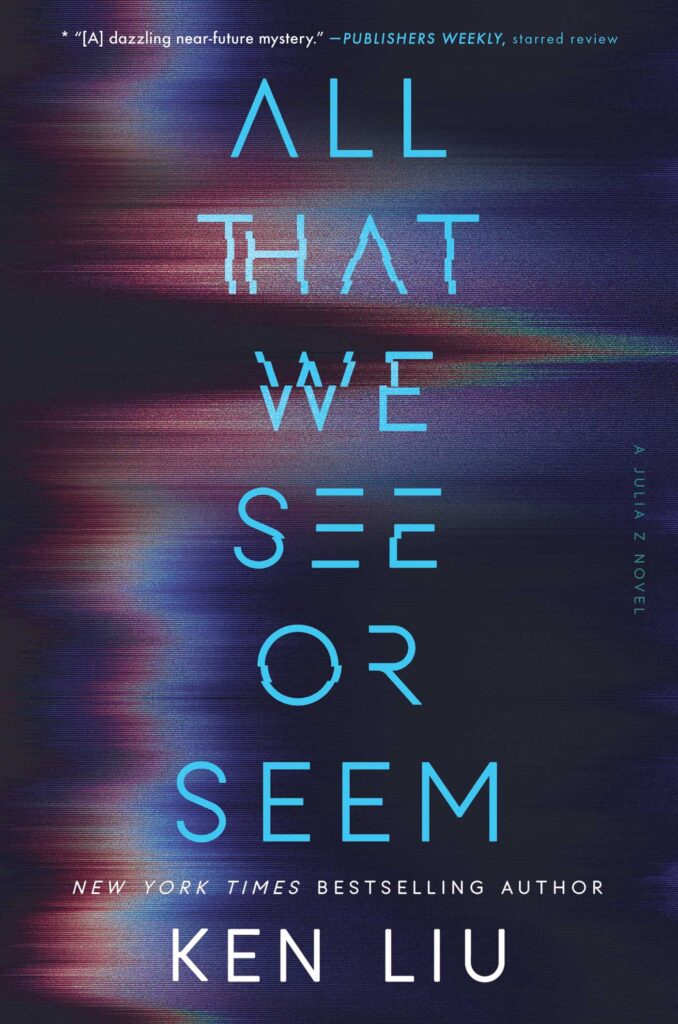
Book 4: All That We See or Seem
- Author: Ken Liu
- Genre: Science Fiction
Why I Picked It Up
After finishing the Remembrance of Earth’s Past trilogy and having my soul crushed by the death of the universe, I needed something different. Ken Liu translated the trilogy, and his name is pretty synonymous with the book to me, and I’ve actually read a couple of his books too. I just never read All That We See or Seem for some reason. Like, I genuinely don’t know why I didn’t. So, when I saw that this was a novella actually, I thought: let’s give it a shot—what’s the worst that could happen?
Spoiler alert: The existential dread transcended across multiple realities after this.
Summary
The story follows a woman experiencing two parallel lives. In one reality, she lives in a society reminiscent of imperial China. In the other, she exists in what seems to be a futuristic, technologically advanced world. Every time she falls asleep in one world, she wakes up in the other. As the story progresses, she begins to question which reality is real and which is a dream. The boundaries between the two lives blur, and she must grapple with questions of identity, consciousness, and what it means to exist when you’re split between two incompatible realities.
What I Liked
Ken Liu’s prose is gorgeous. After Liu Cixin’s functional, idea-driven writing, Ken Liu’s style feels lyrical and deliberate. Every sentence carries weight, and the imagery is vivid without being overwrought. It’s a completely different reading experience from the trilogy, and the shift was exactly what I needed.
The philosophical questions at the heart of the story are genuinely thought-provoking. Which life is real? Does it matter if one is a dream if both shape who you are? The novella doesn’t provide easy answers, and I appreciated that ambiguity. It trusts the reader to sit with uncertainty.
The dual-reality structure is handled beautifully. Liu doesn’t make it gimmicky or confusing. Each world feels distinct, fully realized, and equally compelling. As someone who really likes the idea of parallel universes and alternative realities, this story actually gave me a clear idea on how to approach the topic. Like, I’ve had this plot bunny in my head for a really long time, and reading this novella was like—a switch flipped and now I know how you write good parallel reality sci-fi. Seriously, the transitions between the two realities are seamless, and as the boundaries blur, the disorientation feels intentional and effective.
This book isn’t just a cerebral puzzle—it’s about a woman trying to figure out who she is when her sense of self is fractured across two lives. The stakes are deeply personal, and that intimacy makes the story resonate even when the sci-fi concepts get abstract.
Downsides
The ending is ambiguous in a way that will frustrate some readers. If you need clear answers about which reality is “real” or what happens to the protagonist, you won’t get them. The ambiguity is intentional, but it can feel unsatisfying if you were hoping for resolution.
The philosophical heavy-lifting can feel a bit dense. Liu is clearly engaging with questions about consciousness, reality, and identity, and while that’s fascinating, it occasionally slows the narrative momentum. There are stretches where the story feels more like a meditation than a plot-driven narrative.
The characterization is somewhat thin. The protagonist is more of a vehicle for exploring the central concept than a fully fleshed-out person. We get glimpses of her inner life, but she doesn’t feel as dimensional as I wanted her to be.
Final Thoughts & Who Should Read It
If you enjoyed The Paper Menagerie by Ken Liu, Stories of Your Life and Others, or Exhalation by Ted Chiang, you’ll appreciate this. It’s thoughtful, beautifully written, and emotionally resonant but it’s not plot-heavy or action-driven.
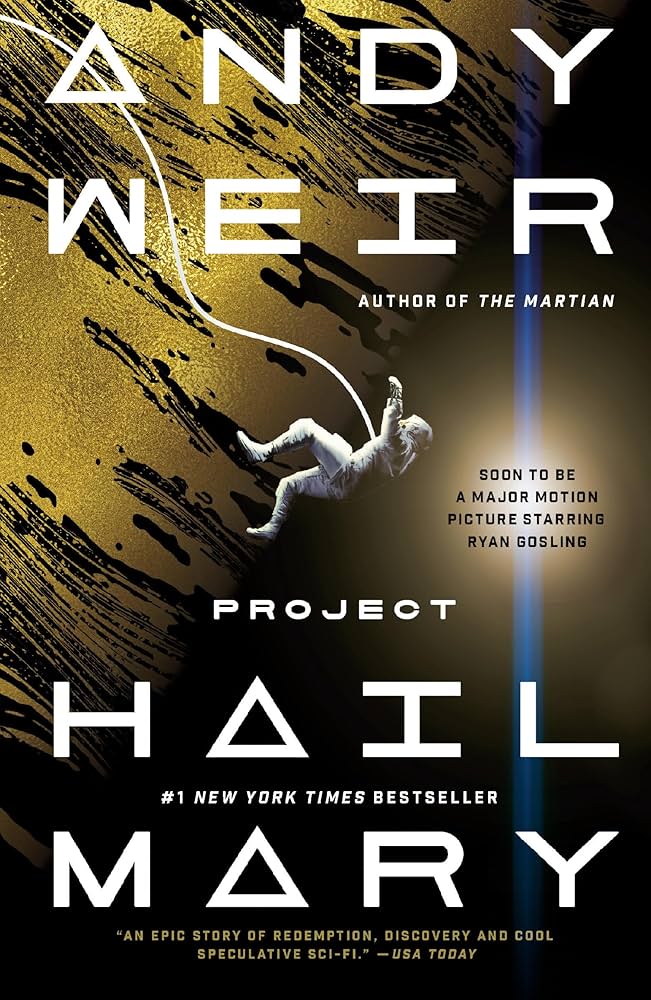
Book 5: Project Hail Mary
- Author: Andy Weir
- Genre: Science Fiction
Why I Picked It Up
After a month of existential dread courtesy of Liu Cixin and philosophical ambiguity from Ken Liu, I needed something optimistic. I needed sci-fi that doesn’t end with the death of the universe or unanswerable questions about consciousness. I needed fun.
Everyone kept telling me Project Hail Mary was exactly that: hard sci-fi with actual hope, humor, and a protagonist who solves problems instead of watching civilizations collapse. Andy Weir wrote The Martian, which I loved, so I figured this was a safe bet for ending December on a lighter note.
Summary
Ryland Grace wakes up on a spaceship with no memory of how he got there. He doesn’t know his name, his mission, or why he’s alone in a room with two dead crewmates. As his memory slowly returns, he pieces together the truth: Earth is dying. The sun is dimming because of an alien microorganism called Astrophage that’s consuming its energy, and if nothing is done, humanity will freeze to death within decades.
Ryland was sent on a desperate Hail Mary mission to travel to a distant star system, find a solution, and save Earth. But things don’t go according to plan. Alone in deep space with failing equipment, Ryland makes first contact with an alien named Rocky, an intelligent being from another doomed civilization facing the same Astrophage crisis. Despite language barriers, biological incompatibility, and the fact that they’re literally from different worlds, Ryland and Rocky form an unlikely partnership to solve the problem and save both their planets.
What I Liked
Project Hail Mary is a breath of fresh air. It’s optimistic without being naive, hopeful without ignoring the stakes, and genuinely funny without undercutting the tension. Weir writes hard sci-fi that doesn’t feel like homework—it’s accessible, engaging, and entertaining.
Ryland Grace is a fantastic protagonist. He’s not a genius superhero, he’s a middle school science teacher who’s good at thinking on his feet and explaining complex concepts simply. He’s sarcastic, resourceful, and deeply human. His internal monologue is hilarious, and his problem-solving process is genuinely fun to follow.
The friendship between Ryland and Rocky is the emotional heart of the book, and it’s wonderful. Despite being from completely different species with incompatible biologies, they develop a genuine bond based on mutual respect, shared goals, and a lot of trial-and-error communication. Rocky is charming, funny, and one of the best alien characters I’ve ever read.
The science is rigorous but explained clearly. Weir is great at making complex physics, chemistry, and biology understandable without dumbing it down. Ryland’s problem-solving process is logical and grounded in real science, which makes his successes feel earned rather than convenient.
The structure works brilliantly. The book alternates between Ryland’s present-day survival on the ship and flashbacks to how he ended up on the mission. The dual timeline builds tension effectively, and the reveals about Earth’s crisis and Ryland’s backstory are perfectly timed.
The pacing is tight. Weir knows how to keep the momentum going. Every time Ryland solves one problem, another emerges, and the stakes keep escalating without feeling contrived. I genuinely couldn’t put this down.
Downsides
The amnesia setup feels a bit gimmicky. Ryland conveniently forgets crucial information at the start, which allows Weir to spoon-feed exposition through flashbacks. It works narratively, but it’s an obvious structural choice that some readers might find contrived.
Some of the science explanations can feel overly detailed. Weir loves explaining every step of Ryland’s problem-solving process, which is great if you’re into hard sci-fi, but it can slow the pacing if you’re not as invested in the minutiae of orbital mechanics or chemical reactions.
The flashback sections are less compelling than the present-day storyline. Ryland’s time on Earth—dealing with bureaucracy, being recruited for the mission, training—is necessary for context, but it’s nowhere near as engaging as his adventures in space with Rocky. I found myself rushing through flashbacks to get back to the main plot.
Some of the humor is very Andy Weir. If you loved The Martian, you’ll love this. If you found Mark Watney’s quippy, self-aware narration annoying, Ryland Grace will grate on you in the same way. The tone is relentlessly upbeat and sarcastic, which works for me but might not land for everyone.
The villains (to the extent there are any) are one-dimensional. The antagonistic forces are mostly bureaucratic incompetence and the laws of physics. There’s no real human antagonist, which is fine thematically but means the conflict is primarily man vs. nature rather than man vs. man.
Final Thoughts & Who Should Read It
If you enjoyed The Martian by Andy Weir, Bobiverse series by Dennis E. Taylor, or Children of Time by Adrian Tchaikovsky, you’ll love this. It’s smart, funny, hopeful, and a reminder that sci-fi doesn’t have to be bleak to be brilliant.
What I Read in December: Summary & Favourite (and Least Favorite) Book
December was exactly what I needed it to be: heavy, existential, and ultimately clarifying. I stuck with my annual tradition of re-reading the Remembrance of Earth’s Past trilogy, and it hit just as hard as it does every year.
Adding All That We See or Seem and Project Hail Mary to the mix was a good call. Ken Liu’s novella gave me the philosophical introspection I needed after the trilogy’s bleakness, and Andy Weir reminded me that sci-fi doesn’t have to end in despair.
If I had to pick a favorite, it’s The Three-Body Problem. I know The Dark Forest is objectively more ambitious and philosophically dense, but The Three-Body Problem is the one that hooked me into this world in the first place. Every time I re-read it, I notice new details, new connections, new reasons to be horrified by humanity’s capacity for cruelty and self-destruction.
As for least favorite, I’m going with The Dark Forest. But I cannot get past the “ideal woman” subplot with Luo Ji. I know Liu Cixin is showing Luo Ji’s selfishness and escapism. But it still feels like the Manic Pixie Dream Girl trope dialed up to eleven, and I hate it. Give me ruthless game theory and civilizational collapse all day, but don’t make me sit through a grown man playing house with his imaginary perfect woman.
So yeah. December reading: complete. Existential dread: fully activated. Motivation for 2026: locked in.
What did you read this month? Any sci-fi recommendations? Let me know in the comments.


You May Also Like

How You Can Leverage AI Tools to Write Faster

Book Talk: What I Read in November