Book Talk: What I Read in November
November’s been quite happening if I do say so myself. Between school and a dramatic Black Friday at work, I feel like I’ve been tethering at the edge of glory. Or madness. And yeah, this analogy is the direct result of a few books I’ve been reading this month. But also because of my general romanticisation of the coming winter.
And let me tell you, it’s been cold but not nearly as cold as I want it to be. I want the winds to beat against the floor length windows wrapping three quarters of my apartment. The fog to make it impossible for me to see if the bus approaching is the right one. The snow to be so thick that it’ll soak my winter shoes and coat.
I’m also working on my manuscript, in case anyone’s wondering. I spoke about it in a blog a couple of days ago. I promise my actual writing isn’t as bad as the paragraph above. Seriously, you can read my publications to see.
Anyway, I’ll stop fooling around here and get to the point: what I read in November. I always find it difficult to start these blogs. So, without wasting any time, let’s begin.
November Breakdown: Book Recommendations
As you know, I’ve been actively reading at least a book a week this year. I’m actually on track to 64 books this year, which is huge because I only read 20 books last year. If you’re interested in what I’m up to, you can check out my Goodreads account. I update it like once or twice a month, and I’ve already planned out my December reading list.
Spoiler alert: it’s a sci-fi month for December.
So, for this month, here’s the list of what I read in October:
- The Hate U Give by Angie Thomas
- Looking for Alaska by John Green
- The Silent Patient by Alex Michaelides
- The Thursday Murder Club by Richard Osman
- The Man Who Died Twice by Richard Osman
- Kim Jiyoung, Born 1982 by Cho Nam-Joo
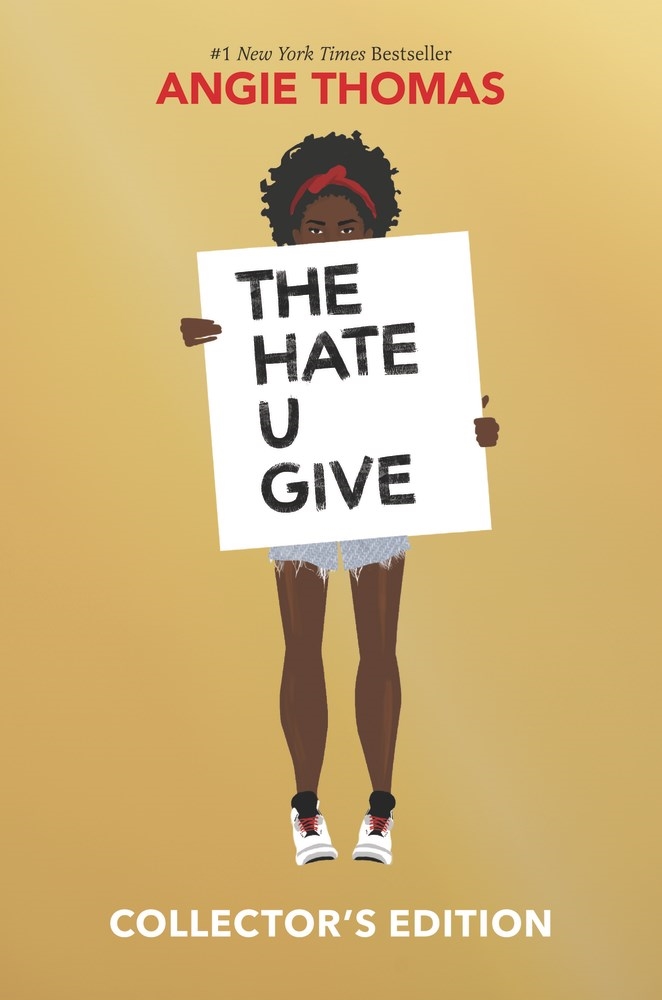
Book 1: The Hate U Give
- Author: Angie Thomas
- Genre: Young Adult, Fiction
Why I Picked It Up
Honestly, this one’s been on my TBR for years. Everyone and their mother has read this book, and I kept seeing it on every “must-read” list this year. So, after spending October in the world of spy thrillers and dystopian nightmares, I wanted something grounded and real. Plus, I’d been meaning to branch out from my usual mystery/thriller rotation. And this seemed like the perfect opportunity to read something more culturally relevant.
Summary
Sixteen-year-old Starr Carter lives in two worlds: the poor, predominantly Black neighborhood of Garden Heights where she lives, and the wealthy, mostly white prep school she attends. She’s learned to code-switch seamlessly between both worlds. Until the night she witnesses her childhood best friend, Khalil, get shot and killed by a police officer. Suddenly, she becomes the only witness to a tragedy that sparks national headlines, protests, and a media firestorm. As pressure mounts from all sides, Starr must find her voice and decide what she’s willing to risk to speak up.
What I Liked
Angie Thomas absolutely nailed Starr’s voice. It’s authentic, raw, and powerful without ever feeling preachy or like she’s reading from a script. Starr feels like a real teenager navigating an impossible situation. She’s scared, angry, confused, and trying to figure out who she is in the middle of trauma. The way Thomas handles her internal conflict between staying silent for safety and speaking up for justice is genuinely compelling.
Thomas doesn’t shy away from the complexity of the issues she’s tackling. This isn’t a simple “racism is bad” narrative. She explores colorism, respectability politics, code-switching, police brutality, gang violence, and gentrification without reducing any of it to easy answers. The book trusts its readers to sit with discomfort and think critically, which I really appreciated.
The pacing is strong. Once Khalil’s death happens, the tension never really lets up. Thomas balances the heavy subject matter with moments of lightness—Starr’s relationship with her boyfriend Chris, her friendship with Maya and Hailey, her banter with her family—so it doesn’t feel relentlessly bleak even when things get dark.
Downsides
Some of the dialogue can feel a bit too on-the-nose, especially during confrontations where characters spell out the book’s themes in ways that feel more like teaching moments than natural conversation. There’s a scene with Hailey toward the end that, while emotionally satisfying, felt a little too perfectly scripted.
The romantic subplot with Chris is sweet, but it doesn’t always feel essential to the main story. There are stretches where their relationship drama pulls focus from the more urgent narrative threads, and I found myself wanting to get back to Starr’s journey rather than lingering on whether Chris “gets it” or not.
If you’re not in the right headspace for heavy content, this book will wreck you. It’s emotionally exhausting in necessary ways, but there were moments where I had to put it down and take a break. The depiction of Khalil’s death and its aftermath is visceral and painful, which is the point, but it’s also a lot.
Final Thoughts & Who Should Read It
This is perfect for readers who want contemporary YA that doesn’t pull punches, fans of books like Dear Martin by Nic Stone or All American Boys by Jason Reynolds, or anyone looking to read outside their comfort zone and engage with stories that matter.
Book 2: Looking for Alaska
- Author: John Green
- Genre: Young Adult, Fiction

Why I Picked It Up
After the emotional heaviness of The Hate U Give, I thought I’d stick with YA but go for something a bit different; a classic if you will. And that’s how I found myself going back to Looking for Alaska. I used to be really into this for a brief moment in time during my teens (in fact my tumblr was called Looking For Alaska Supreme lol).
Summary
Miles “Pudge” Halter leaves his uneventful life in Florida for boarding school in Alabama, searching for what the poet François Rabelais called the “Great Perhaps.” At Culver Creek, he falls in with a group of misfits: his roommate Chip “the Colonel,” the brilliant and self-destructive Alaska Young, and the eternally loyal Takumi. Miles becomes infatuated with Alaska—wild, unpredictable, and utterly magnetic—as they pull pranks, discuss philosophy, and navigate the complicated terrain of teenage life. But when tragedy strikes, Miles and his friends are left grappling with guilt, grief, and the impossible question of what really happened that night.
What I Liked
John Green’s writing has this effortless quality that makes the book incredibly readable. The dialogue is witty and fast-paced, and even though some of it veers into “teenagers don’t actually talk like this” territory, it works within the world he’s created. The banter between the characters feels natural and entertaining.
Alaska Young is a fascinating character. She’s messy, contradictory, selfish, and captivating all at once. Green doesn’t try to make her likeable or redeemable—she just is. She’s the kind of character who feels larger than life while you’re reading but also deeply, painfully human. The way the book explores her through Miles’s perspective, with all his romanticizing and misunderstanding, is actually really well done.
The structure of the book is brilliant. It’s divided into “Before” and “After,” and that countdown/count-up format builds tension in a way that’s managed to keep me hooked after all these years. You know something terrible is coming, but you don’t know what, and that dread hangs over every page of the “Before” section.
The exploration of grief in the second half is raw and honest. Green doesn’t offer easy answers or tidy resolutions. The characters sit with their pain, their guilt, and their questions, and the book doesn’t shy away from how messy and uncomfortable that process is.
Downsides
Miles is kind of boring. He’s the everyman narrator who exists primarily to observe and react to the more interesting people around him, and while that’s intentional, it doesn’t make him particularly compelling. His obsession with famous last words is quirky but feels more like a character trait than an actual personality.
The Manic Pixie Dream Girl trope is strong with this one. Alaska exists largely to teach Miles life lessons and shake up his boring existence, and even though Green tries to subvert this by making her flawed and unknowable, she’s still ultimately a vehicle for Miles’s emotional journey. It’s frustrating because she’s the most interesting character in the book, but we only ever see her through his idealized, limited perspective.
Some of the philosophy and existential musings feel very “I’m 16 and this is deep.” There are moments where the characters discuss life, death, and meaning in ways that are supposed to be profound but come across as somewhat shallow or performative. It didn’t ruin the book for me, but I could see it being annoying for some readers.
The pacing in the “After” section drags a bit. While the grief is realistically portrayed, there are stretches where the characters are stuck in circular conversations and repetitive emotional beats that slow the momentum.
Final Thoughts & Who Should Read It
If you enjoyed The Perks of Being a Wallflower or want a coming-of-age story that doesn’t tie everything up with a neat bow, this is worth reading. It’s perfect for fans of character-driven contemporary YA, boarding school settings, and books that make you think (even if the philosophy is a bit heavy-handed). Just go in knowing it’s more about the questions than the answers.
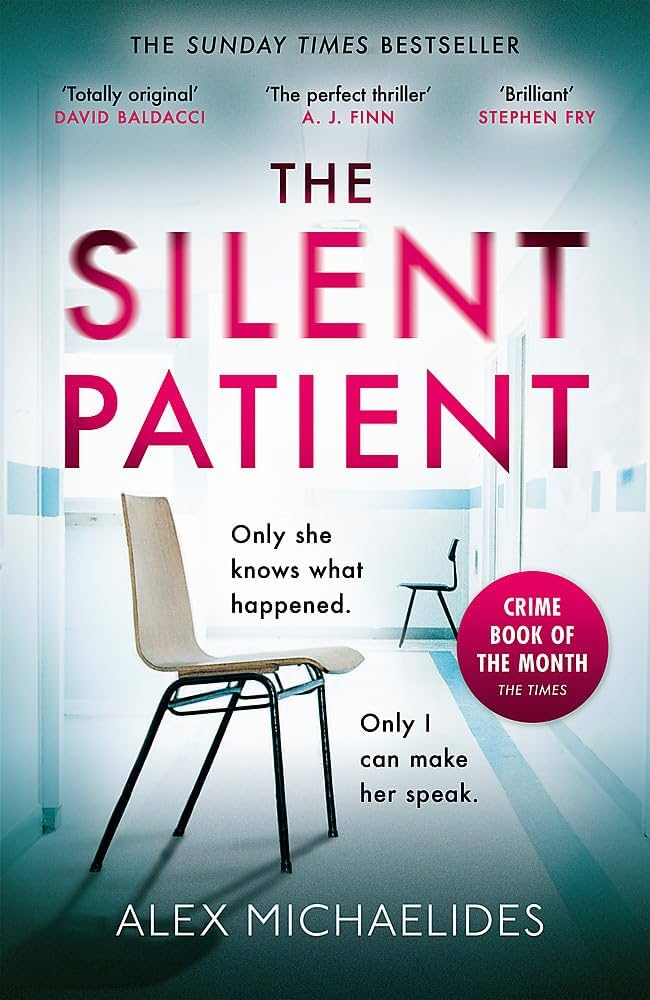
Book 3: The Silent Patient
- Author: Alex Michaelides
- Genre: Psychological Thriller
Why I Picked It Up
After two YA books in a row, I was craving something darker and more twisted. I’d been seeing The Silent Patient everywhere—BookTok, Reddit, every “best thriller” list—and the premise sounded absolutely unhinged in the best way. A woman shoots her husband and then never speaks again? And a psychotherapist becomes obsessed with getting her to talk? Sign me up.
Summary
Alicia Berenson is a famous painter married to an in-demand fashion photographer. They seem to have the perfect life until one night, Alicia shoots her husband Gabriel five times in the face and then stops speaking entirely. She’s declared mentally unstable and sent to a secure psychiatric facility called the Grove. Theo Faber, a psychotherapist, becomes obsessed with Alicia’s case and takes a job at the Grove determined to get her to talk and uncover the truth about why she killed Gabriel.
What I Liked
The premise is genuinely gripping. The idea of a woman who commits murder and then chooses silence is immediately compelling, and Michaelides milks that mystery for everything it’s worth. I was hooked from the first chapter and genuinely couldn’t put it down.
The dual narrative structure works really well. We get Theo’s present-day perspective as he tries to treat Alicia, interspersed with entries from Alicia’s diary leading up to the murder. It creates this perfect tension where you’re constantly piecing together what happened while also watching Theo spiral deeper into obsession.
The twist is wild. I won’t spoil it, but when it hits, it reframes the entire book in a way that makes me want to immediately reread it. It’s the kind of twist that either makes or breaks a thriller, and for me, it absolutely made it. I did not see it coming, and I’m usually pretty good at predicting these things.
Michaelides clearly knows his Greek mythology and psychology, and he weaves both into the narrative in ways that feel organic rather than showy. The references to Alcestis and the exploration of trauma, silence, and obsession give the book depth beyond just being a twisty thriller.
Downsides
Theo is… not a great person. And not in the fun, morally gray antihero way. He’s obsessive, unprofessional, and frankly kind of creepy. His relationship with his wife Kathy is uncomfortable to read, and some of his choices as a therapist are borderline unethical (okay, fully unethical). I know that’s kind of the point, but it made it hard to stay invested in his perspective at times.
The writing can be pretty flat. Michaelides gets the job done, but there’s nothing particularly elegant or memorable about the prose. It’s very straightforward, almost clinical, which works for a psychological thriller but doesn’t make for the most engaging reading experience. I wanted more atmosphere, more mood.
Some of the secondary characters feel like props rather than people. The other patients at the Grove, Theo’s colleagues, even Kathy—they’re all there to serve the plot rather than feeling like fully realized individuals. It’s a very plot-driven book, which is fine, but it means the emotional stakes don’t always land as hard as they could.
Once you know the twist, the book loses a lot of its reread value. Unlike some thrillers where you pick up on new details the second time around, this one is so dependent on that final reveal that going back feels a bit pointless.
Final Thoughts & Who Should Read It
Perfect for fans of Gone Girl, The Woman in the Window, or anyone who loves unreliable narrators and books that make you want to immediately text your friends to say “WHAT JUST HAPPENED.”
Book 4: The Thursday Murder Club
- Author: Richard Osman
- Genre: Mystery

Why I Picked It Up
After The Silent Patient absolutely wrecked me with that twist, I needed something lighter. I’d heard about The Thursday Murder Club everywhere. Plus, I’d seen the movie and it was amazing. So, this one was definitely a no-brainer for me.
Summary
In a peaceful retirement village called Coopers Chase, four unlikely friends meet every Thursday to discuss unsolved murders over tea and biscuits. There’s Elizabeth, a former spy with secrets; Joyce, who documents everything in her diary; Ibrahim, a thoughtful psychiatrist; and Ron, a former union activist with a sharp tongue. When a local property developer is found dead, the group decides to investigate, using their combined skills, life experience, and complete disregard for authority to solve the case before the police do. What starts as an intellectual exercise quickly becomes dangerous as more bodies pile up and the Thursday Murder Club finds themselves in the middle of a very real, very deadly mystery.
What I Liked
The characters are absolutely delightful. Elizabeth, Joyce, Ibrahim, and Ron feel like real people with distinct personalities, histories, and quirks. They’re not just “cute old people solving crimes,” they’re sharp, funny, complicated individuals who happen to be in their seventies and eighties. Joyce’s diary entries are charming and hilarious, Elizabeth is brilliantly enigmatic, Ibrahim is thoughtful and kind, and Ron is grumpy in the most lovable way.
Richard Osman’s writing is warm and witty without being saccharine. He balances humor with genuine emotion, and the book never talks down to its elderly characters or treats aging as a punchline. There’s real tenderness in how he writes about friendship, loneliness, mortality, and finding purpose later in life.
The mystery itself is solid. It’s not groundbreaking or particularly complex, but it’s well-constructed with enough twists and red herrings to keep you guessing. Osman plays fair with the clues, and the resolution feels earned rather than pulled out of nowhere.
The supporting cast is great too. DCI Chris Hudson and PC Donna De Freitas are competent, likeable, and their interactions with the Thursday Murder Club are genuinely funny. The dynamic between the amateur sleuths and the actual police could have been annoying, but Osman handles it with charm and humor.
Downsides
The pacing can be slow, especially in the first half. Osman takes his time setting up the world of Coopers Chase and introducing all the characters, which is lovely for atmosphere but means the actual mystery doesn’t really kick into gear until you’re a good chunk into the book. If you’re expecting a fast-paced thriller, you’ll be disappointed.
There are a lot of characters to keep track of. Between the four main members of the Murder Club, the police officers, the various residents of Coopers Chase, and all the suspects, it can get a bit overwhelming. I found myself flipping back occasionally to remember who someone was or how they fit into the story.
Some of the charm can feel a bit forced. Osman clearly loves these characters, and sometimes that love translates into moments that feel a little too precious or whimsical. It’s a minor complaint, but there were a few scenes where I felt like he was trying just a bit too hard to make me smile.
The ending wraps up a little too neatly. Everything gets tied up with a bow in a way that feels slightly unrealistic, even for a cozy mystery. I didn’t mind it, but if you prefer your mysteries with more ambiguity or moral grayness, this might feel too tidy.
Final Thoughts & Who Should Read It
Perfect for fans of Agatha Christie, cozy mysteries, or anyone who wants a mystery that’s more about the characters than the crime. If you enjoyed books like The Curious Incident of the Dog in the Night-Time or A Man Called Ove, you’ll love this.
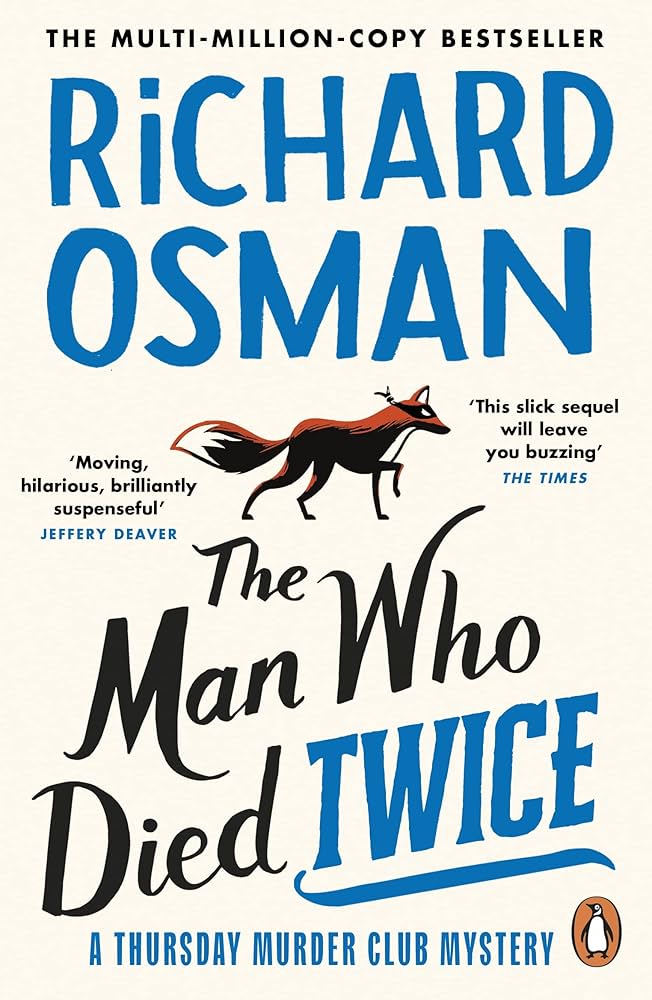
Book 5: The Man Who Died Twice
- Author: Richard Osman
- Genre: Mystery
Why I Picked It Up
I finished The Thursday Murder Club and immediately needed more. Like, the same day. I wasn’t ready to leave Elizabeth, Joyce, Ibrahim, and Ron behind, and luckily I didn’t have to because the sequel was sitting right there on my Kindle. I knew going into a sequel that it could either be just as good or a massive letdown, but I was willing to take that risk because I was fully invested in these characters and their world.
Summary
Elizabeth receives a mysterious letter containing a photograph that drags her back into her past as a spy. An old colleague, Marcus Carmichael, is in trouble and needs her help with a missing fortune in stolen diamonds. What starts as Elizabeth’s personal problem quickly pulls the entire Thursday Murder Club into a dangerous game involving international criminals, local gangsters, and a body that won’t stay buried. Meanwhile, a dangerous new enemy arrives in town, and the gang must use all their skills to protect themselves and solve another murder before it’s too late.
What I Liked
This is a rare sequel that’s actually better than the first book. Osman clearly knows his characters now, and he’s more confident in his storytelling. The pacing is tighter, the mystery is more compelling, and the stakes feel higher without losing any of the charm that made the first book so enjoyable.
Elizabeth finally gets her moment to shine. The first book hinted at her mysterious spy past, and this one delivers on that promise. We get glimpses into who she was and what she’s capable of, and it’s both thrilling and heartbreaking. Her relationship with her husband Stephen, who has dementia, is handled with such care and tenderness that it genuinely made me tear up.
The humor is sharper. Osman has found the perfect balance between cozy and clever. Joyce’s diary entries are still delightful, Ron is still grumpy and hilarious, and Ibrahim continues to be the thoughtful heart of the group. The banter between them feels even more natural now that we know them better.
The mystery itself is more engaging than the first book. The stakes are personal for Elizabeth, which makes everything feel more urgent. The twists are satisfying, and Osman does a great job of keeping multiple plot threads moving without losing focus.
Bogdan is a fantastic addition to the cast. I won’t say too much to avoid spoilers, but he brings a new energy to the group dynamic and his interactions with the Murder Club are genuinely funny and sweet.
Downsides
If you haven’t read the first book, you’ll be lost. Osman assumes you already know and love these characters, so he doesn’t waste time re-introducing them or explaining their dynamics. That’s great if you’re coming from book one, but it means this absolutely cannot be read as a standalone.
Some subplots feel underdeveloped. There’s a storyline involving Chris Hudson that gets introduced and then sort of fizzles out. It’s not a dealbreaker, but it felt like Osman set up something interesting and then didn’t quite follow through.
The villain is a bit cartoonish. Without giving anything away, the main antagonist is menacing but not particularly nuanced. They’re more of a plot device than a fully realized character, which is fine for a cozy mystery but slightly disappointing after how well-drawn the main characters are.
The ending, again, wraps up a little too neatly. Osman loves his happy endings, and while I appreciate that in a cozy mystery, there’s a moment or two where I wished things had stayed a bit messier or more complicated.
Final Thoughts & Who Should Read It
If you enjoyed the first book, this is an absolute must-read. If you’re new to the series, start with book one—you’ll thank me later.
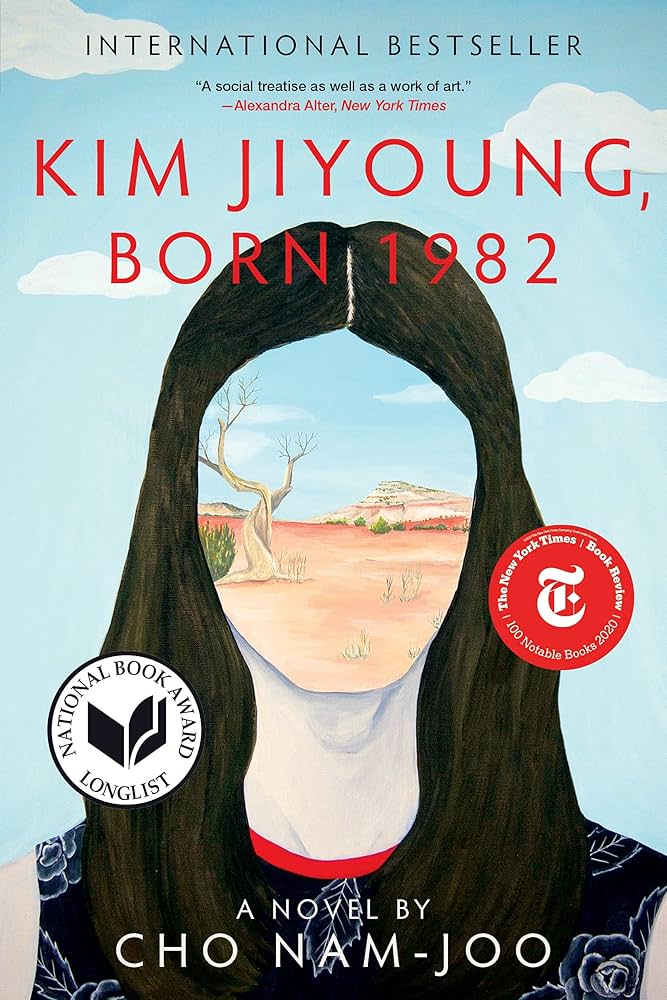
Book 6: Kim Jiyoung, Born 1982
- Author: Cho Nam-Joo
- Genre: Literary Fiction, Feminist Literature
Why I Picked It Up
After breezing through two Richard Osman books back-to-back, I needed something completely different. I couldn’t really find anything and I was actually super close to doing my annual rereading of the Remember of Earth’s Past series which you’ll learn more about in December when my best friend actually recommended Kim Jiyoung, Born 1982 to me. She read the first chapter out loud and I was hooked. I don’t normally read a lot of translated fiction so I thought it might be interesting to diversify my reading beyond Western authors. And it was the right choice.
Summary
Kim Jiyoung is a thirty-something woman living in Seoul. She’s married, has a young daughter, and recently quit her job to become a stay-at-home mother. On the surface, her life looks ordinary, even privileged. But Jiyoung begins exhibiting strange behavior—speaking in the voices of other women, channeling their stories and grievances. Through sessions with a male psychiatrist, we learn Jiyoung’s life story: growing up as the less-favored daughter, experiencing harassment and discrimination at school and work, sacrificing her career for marriage and motherhood, and slowly disappearing into the roles assigned to her by a deeply patriarchal society. This isn’t a dramatic story. It’s the quiet, crushing accumulation of a thousand small injustices that ultimately break a woman who was simply trying to live.
What I Liked
Cho Nam-Joo’s approach is devastatingly effective. This isn’t written like a traditional novel with dramatic plot twists or emotional climaxes. It reads almost like a case study or sociological report, clinical and detached, which somehow makes it even more powerful. The matter-of-fact tone forces you to sit with the injustice rather than getting swept up in emotional manipulation.
Jiyoung is heartbreakingly relatable despite the cultural differences. I’m not Korean, and I didn’t grow up in South Korea, but so much of what she experiences—being talked over, having her career dismissed as less important than her husband’s, being judged for her choices no matter what she does—felt universal. Like one of the reasons I do what I do, live where I live is because I’d seen my own mother give up her own agency for a very long time simply because this is how things are and I refused to follow that example.
Cho does a wonderful job in capturing how systemic sexism operates through a million tiny cuts rather than one big wound. The book is short and readable but absolutely packed with meaning. The ending is gut-wrenching precisely because it’s so understated. Cho doesn’t offer easy answers or triumphant moments of rebellion. She shows you the reality of how these systems perpetuate themselves, and it’s more damning than any dramatic confrontation could be.
Downsides
The clinical, detached narrative style that makes the book so effective can also make it feel emotionally distant. If you’re looking for deep character development or intimate emotional connection, you might find this frustrating. Jiyoung is more of a vehicle for examining systemic issues than a fully fleshed-out individual. It’s intentional but can feel unsatisfying.
It’s relentlessly bleak. There’s no relief, no moments of joy or hope, just an unending catalog of microaggressions, discrimination, and erasure. I understand that’s the point, but some readers might find it to be a difficult read. I personally think that we should be reading books like these because it does reveal more about the feminine experience. It’s not always massive trauma or incidents. Sometimes, it’s the little things that slowly add up and lead to the end result that we see here.
Some readers might find the statistics and footnotes distracting. Cho includes real data about gender discrimination in Korea, which strengthens her argument but can pull you out of the narrative. I didn’t mind it, but I can see it being jarring for people expecting a more traditional novel.
Final Thoughts & Who Should Read It
This is essential reading for anyone interested in feminist literature, contemporary Korean fiction, or understanding how systemic discrimination operates through seemingly ordinary life events. If you enjoyed The Handmaid’s Tale or Convenience Store Woman, this will resonate with you.
What I Read in November: Summary & Favourite (and Least Favorite) Book
November was an interesting reading month because I genuinely had no plan going in. But then I picked up The Hate U Give and realized I was apparently in the mood for books that make me feel things.
What’s interesting is how varied this month felt compared to October. I went from social justice YA to murder mysteries solved by retirees to feminist literature from Korea, and somehow it all worked. Each book brought something completely different to the table.
If I had to pick a favorite, it’s definitely The Man Who Died Twice. I know, picking the sequel over feels like cheating, but honestly, it was just that good. Richard Osman took everything I loved about The Thursday Murder Club and made it better.
As for least favorite, I’m going with Looking for Alaska. Now, before anyone comes for me, it’s not because it’s a bad book. I’ve liked it since I was a kid. It’s just that in this particular mix, it just didn’t hit.
Also, I’m kind of annoyed with the whole Manic Pixie Dream Girl trope in general these days. Especially with the whole Pick Me thing we’re seeing these days. I just think that Pick Me girls are a response to the Manic Pixie Dream Girl; like they won’t admit it, but I bet they want to be that. I just don’t like the trope per say—nothing bad to say about John Green; it’s just a preference.
So yeah, these books made me think, made me feel, and made me want to immediately talk to someone about them. And that’s it for November.
What did you think of my picks? Any recommendations for December? Let me know in the comments!


You May Also Like

How to Make Your Website More Mobile-Friendly?

How to Write Dystopian Fiction